How to Evaluate Mountain View Lots in Sevier County
March 24, 2026
March 24, 2026
You can fall in love with a Smoky Mountain view in a heartbeat. But the right lot does more than look good. In Sevier County, view quality, slope rules, septic approvals, utilities, and short-term rental permits can make or break your plans. This guide shows you how to evaluate a mountain-view lot so you protect your view, your budget, and your long-term goals.
Let’s dive in.
If you plan to rent the home, confirm where the lot sits. In unincorporated areas, Sevier County requires an annual Short-Term Rental Unit permit with inspection starting January 1, 2024. Review the county’s requirements in the official Short-Term Rental Unit program guide. Lots inside city limits follow city rules, which are separate from the county. For example, Sevierville publishes its short-term rental requirements. Always verify which jurisdiction applies before you buy.
Sevier County recently updated its Zoning Resolution with hillside and critical-slope provisions that can change setbacks, building envelopes, and review steps for steep or ridgeline parcels. Before you fall for a view, ask whether the lot sits in a hillside or critical-slope overlay, then read the applicable sections on the county’s Planning and Zoning page. These rules influence where and how you can build.
Sevier County uses a centralized online platform for building permits and submittals. Plan on coordinating with Planning and Zoning, Building Inspections, and Environmental Health for lots outside city limits. Each city has its own process if your lot is inside a municipality. Start your timeline by confirming which offices you will work with through the county’s Planning and Zoning page.
The strongest long-range views often sit on ridgelines and benches with wide open aspects. Ask which direction the main view faces. East means sunrise, west offers sunsets, and a southeast or south aspect brings bright daytime light year-round. Orientation affects energy, window placement, and how a room feels in every season.
Most of Sevier County’s mountains are mixed deciduous forest. In leaf-off months, views can look bigger and farther than they do in summer. Ask when listing photos were taken, and preview the lot in both seasons if possible. Your summer view can be very different from what you saw in February.
A great view today can change with tree growth or a neighbor’s build. Check for recorded view easements, conservation easements, setback language in the plat, or HOA rules that limit height or clearing. Do not assume a view is permanent without reading recorded documents and the subdivision covenants.
Steep slopes drive up costs for foundations, stormwater control, and driveways. They can also trigger hillside or critical-slope review. Before you plan a floor plan, confirm any overlay status through Planning and Zoning and factor engineering into your budget.
Mountain sites behave differently depending on bedrock, colluvial soils, and topographic position. On very steep lots, a geotechnical engineer is a smart contingency for retaining walls, deep footings, and driveway design. You can review regional bedrock and geomorphic context in the USGS geologic map for the Smokies (USGS SIM‑2997) to understand the broader setting before ordering site work.
Many mountain-view lots rely on on-site septic. Sevier County Environmental Health oversees site evaluations, septic permits, and inspections. Permits can expire, and processing times vary, so start early. Read the county’s requirements and permit process on the Environmental Health page. For screening, use the USDA NRCS Web Soil Survey to see soil depth, permeability, and constraints across the parcel, then follow up with the county and, when needed, a licensed soil scientist.
Confirm who serves the area and what it costs to reach your building site. The Sevier County Electric System can advise on line extensions, pole placements, and transformer needs. Remote runs can increase cost and outage risk. Start your planning with the Sevier County Electric System.
Public water is available near towns and through utility districts in some mountain neighborhoods. In specific areas, such as English Mountain, service is provided by districts like the East Sevier County Utility District. If public water is not available, a drilled well is common, and you must observe setbacks between wells and septic systems. Review service availability, capacity, and reliability with the utility provider; for context on mountain service operations, see ESCUD’s archived meeting materials (East Sevier County Utility District). If no sewer is present, you will need a county septic permit before occupancy, which you can confirm through Environmental Health.
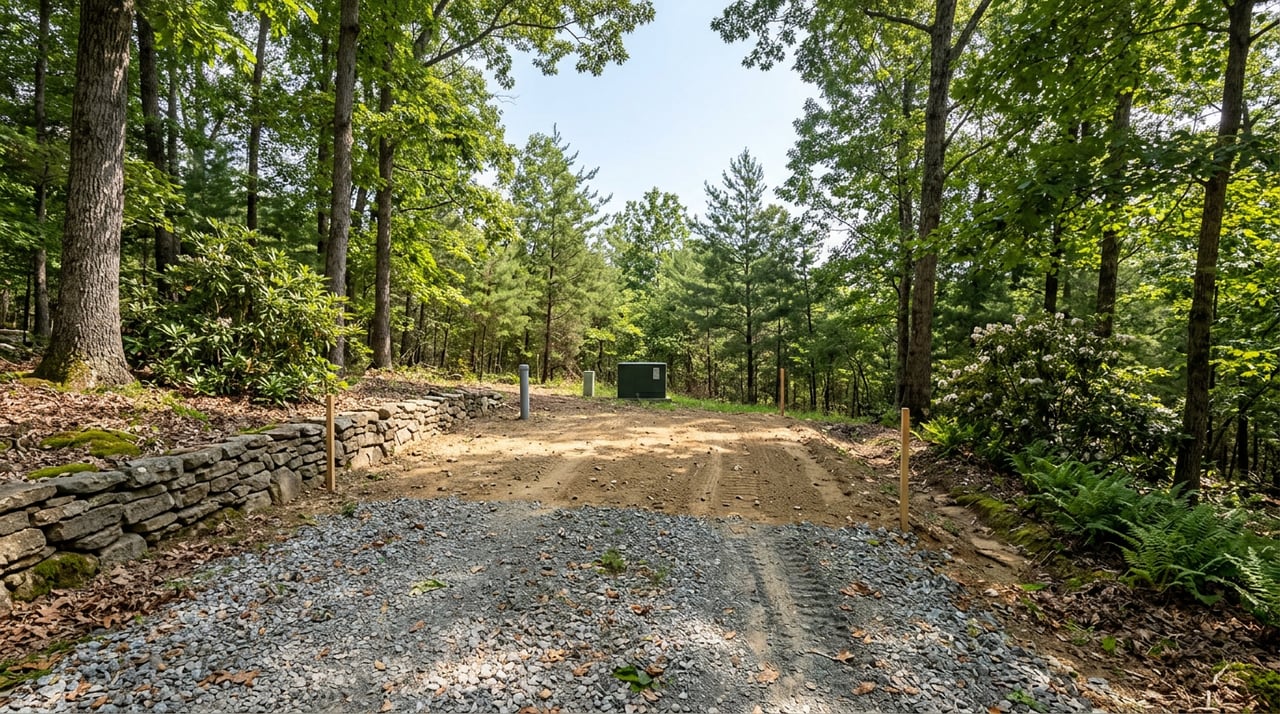
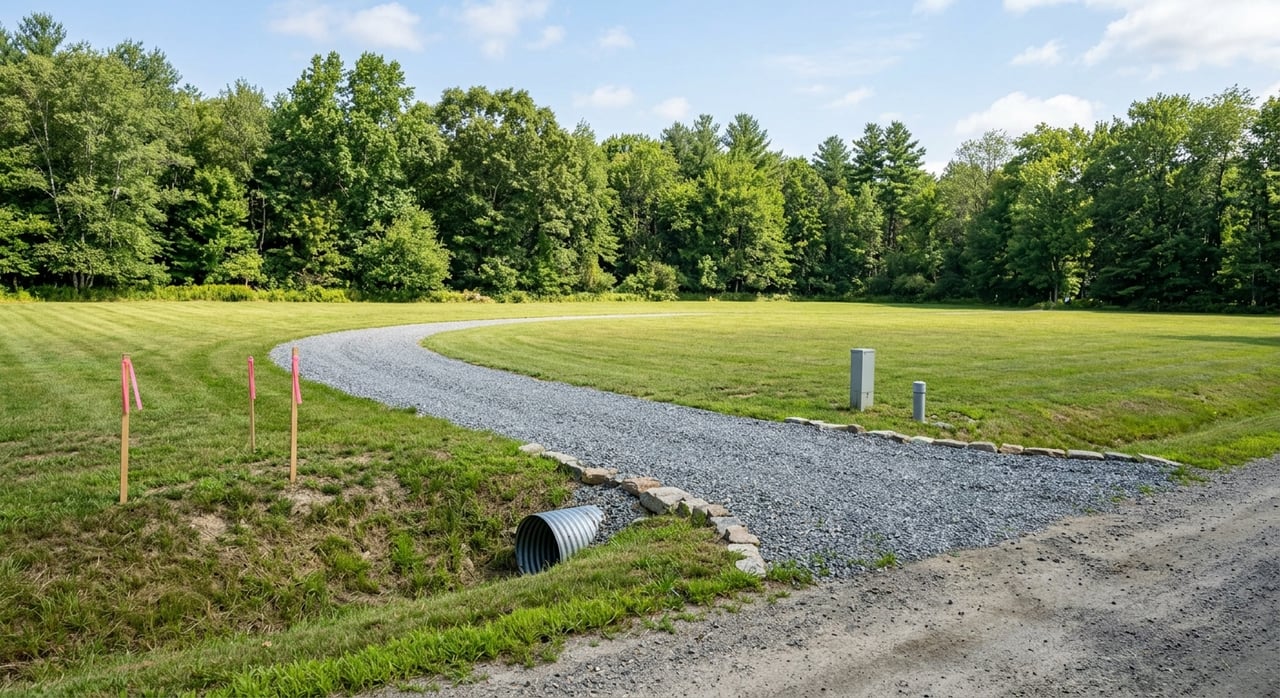
Mountain driveways can be costly when they require switchbacks, retaining walls, or significant cut and fill. Grades and turnarounds may also need to meet fire apparatus access standards set by local building inspections and the fire marshal. Ask early about drive slope limits, turning radii, and hammerhead or cul-de-sac requirements so you design an access plan that will pass inspection.
Coverage in the mountains is highly variable. Check carrier coverage maps at the exact coordinates and, more importantly, test your own device on site at the proposed home pad. Run a speed test or try a temporary hotspot to confirm real-world service. This is especially important for remote work and smart home systems.
The 2016 Chimney Tops 2 fires are a reminder that wildland fire risk exists in and around Gatlinburg and across Sevier County. Review lessons learned and the value of defensible space and evacuation planning in the National Park Service’s Chimney Tops 2 fire review. Ask about any Community Wildfire Protection Plan efforts or Firewise work near your lot.
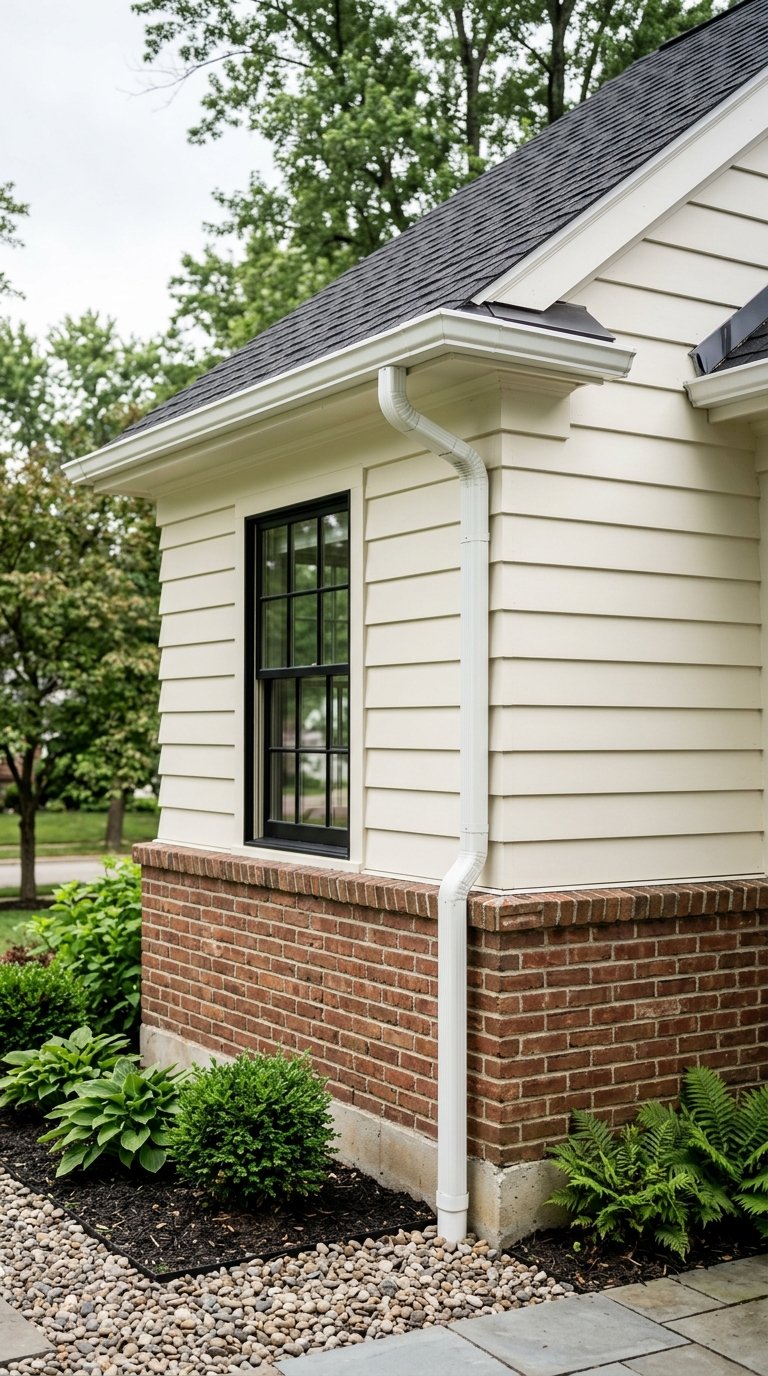
Mountain parcels are less likely to sit in FEMA’s 100-year floodplain, but hollows, small channels, and culverts can still create flood and erosion issues. Check the parcel on the FEMA Flood Map Service Center, then walk the site after a heavy rain if possible to observe natural drainage paths.
Steep cut and fill, poor surface drainage, and building at the toe of a slope can lead to slope movement or rockfall. A geotechnical assessment is a prudent step for steep parcels, especially where retaining walls or deep footings are planned. Use the USGS geologic map as a regional reference when you scope that work.
Use this quick list to keep your lot search on track. Ask the seller or listing agent, and verify independently with county records and utilities:
A mountain-view lot in Sevier County can deliver the Smokies experience you want, but the best outcomes come from careful homework. Confirm rental rules, check hillside overlays, verify septic and water early, plan utilities and access, and design with wildfire and drainage in mind. With the right guidance, you can secure a view that lasts and a property that performs.
If you want a second set of experienced eyes on a lot, or you need help coordinating county checks and utility calls, reach out to Wanda Hendryx. You will get local, practical guidance tailored to your goals.
Stay up to date on the latest real estate trends.


Get assistance in determining the current property value, crafting a competitive offer, writing and negotiating a contract, and much more. Contact me today.