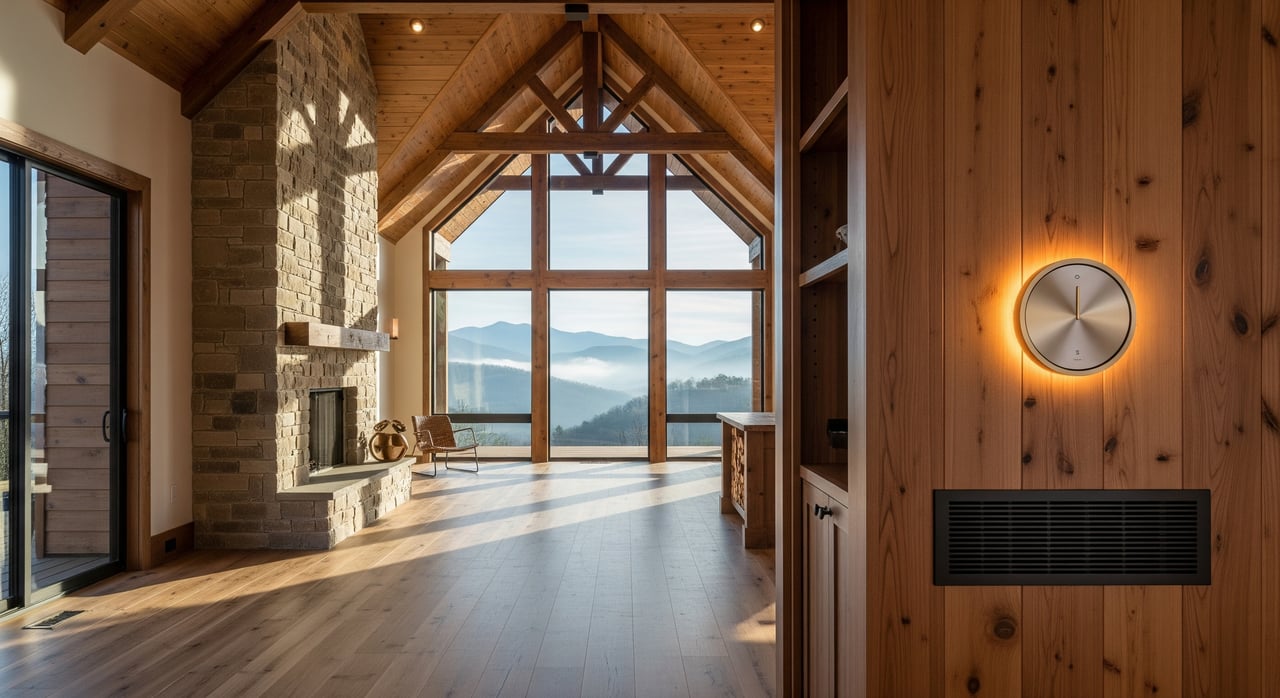
Practical Townsend Cabin Humidity Control Strategies
October 16, 2025
October 16, 2025
Foggy windows, musty closets, and sticky summer air can turn a relaxing cabin stay into a maintenance headache. If you own a cabin in Townsend, you know the Smokies bring beauty and humidity in equal measure. The good news is you can control moisture with a few smart moves that protect your wood, your air quality, and your investment. In this guide, you’ll learn Townsend‑specific tips, target humidity levels, cost ranges, and when to bring in local pros. Let’s dive in.
Townsend sits in the foothills of the Great Smoky Mountains where outdoor air often holds a lot of moisture. Local summaries show average relative humidity commonly in the upper 60s to low 70s, with summer months especially damp and hazy. Local climate data for Townsend highlights July as one of the wettest periods.
When you bring that humid air indoors or add moisture from showers, cooking, or drying gear, indoor relative humidity (RH) can climb quickly. Building science guidance notes that ventilation without moisture control can push RH up, especially in hot, humid climates. ASHRAE’s humidity guidance supports designing ventilation and dehumidification together.
For comfort and health, aim to keep indoor RH in the 30 to 50 percent range and avoid going above 60 percent. That helps limit mold and dust mites, according to EPA moisture guidance.
If your cabin is a newer log home, balance wood care with mold control. Many log‑home sources recommend not letting RH drop below about 40 percent during the first seasoning years. A balanced setpoint around 35 to 45 percent with close monitoring is a practical starting point. See this overview of log home humidity considerations.
You cannot manage what you do not measure. Place simple digital hygrometers on each level, plus one in the crawlspace or basement. Smart sensors with alerts are helpful if your cabin sits vacant between visits. The EPA’s mold guide recommends low‑cost humidity meters as an easy first step.
Before buying equipment, fix what feeds the problem:
These basics are the first line of defense in Tennessee’s climate. The state’s health department outlines these steps in its mold and moisture guidance.
In East Tennessee, vented crawlspaces often pull warm, moist air inside, which raises indoor RH. If your crawlspace is dirt or damp, consider encapsulation with a sealed vapor barrier and a dedicated crawlspace dehumidifier, or a conditioned crawlspace approach. Tennessee guidance and regional experience point to crawlspace work as a high‑impact fix for persistent humidity. Start with the state’s healthy homes recommendations.
Dehumidifiers come in three main types, each with a role in Townsend cabins:
Capacity is usually listed in pints per day. Work with an HVAC pro to size correctly for square footage and local moisture loads. For budgeting, national averages show whole‑house installations commonly ranging $1,200 to $3,500 depending on capacity and duct or electrical needs, per project cost data.
Air conditioning removes moisture while it runs, but oversized systems that short‑cycle often do a poor job dehumidifying. Avoid bringing large amounts of outdoor air inside without a way to remove moisture. Consider a whole‑home dehumidifier or a dedicated outdoor air setup if you plan major upgrades. For the technical why and how, review ASHRAE’s guidance on humidity control.
Use bath and kitchen exhaust fans during and for 15 to 30 minutes after use. Vent clothes dryers outdoors and keep condensate drains clear.
Seal gaps around windows and doors, insulate rim joists and attics, and make sure roof and soffit ventilation are working. These steps reduce humid air leaks, prevent condensation on cool surfaces, and stabilize indoor conditions. Follow building‑science best practices for vapor control in hot, humid climates.
Spring
Summer
Fall
Winter
Ongoing
Plan for the right scope. Portable fixes can be inexpensive, while whole‑house dehumidifiers often run $1,200 to $3,500 installed, based on national cost ranges. Crawlspace encapsulation varies widely depending on drainage, access, and dehumidifier capacity.
For major HVAC or electrical work, check permitting with Blount County Development Services. Always verify licenses and insurance with the state’s resources at verify.tn.gov before you hire.
Humidity control in Townsend is not guesswork. When you measure, fix water sources, prioritize the crawlspace, and right‑size dehumidification, you keep your cabin comfortable and your wood protected. If you are buying, selling, or prepping a Townsend cabin, local guidance can save you time and money.
Have questions about what matters most for resale or rental use in the Smokies? Reach out to Wanda Hendryx for practical, neighborhood‑level advice.
Stay up to date on the latest real estate trends.

Discover the true value a REALTOR® provides during a real estate transaction.
Get assistance in determining the current property value, crafting a competitive offer, writing and negotiating a contract, and much more. Contact me today.